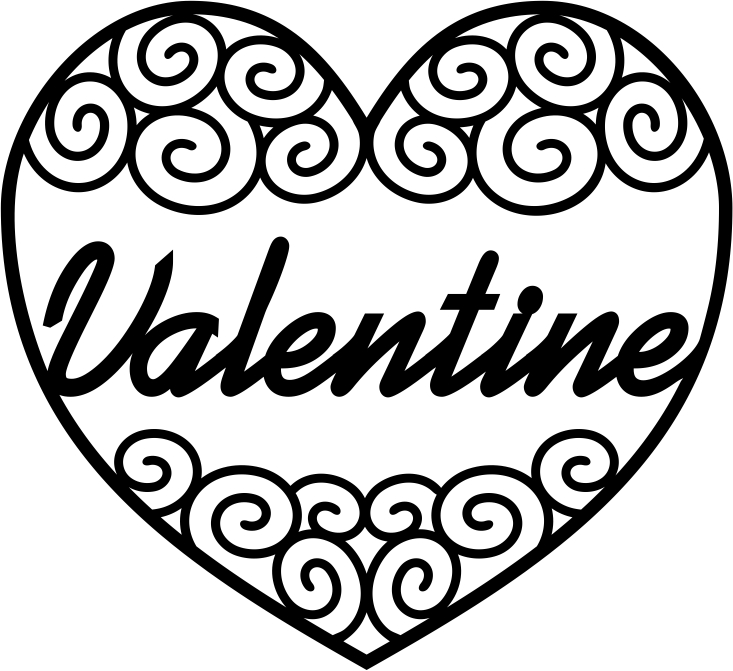
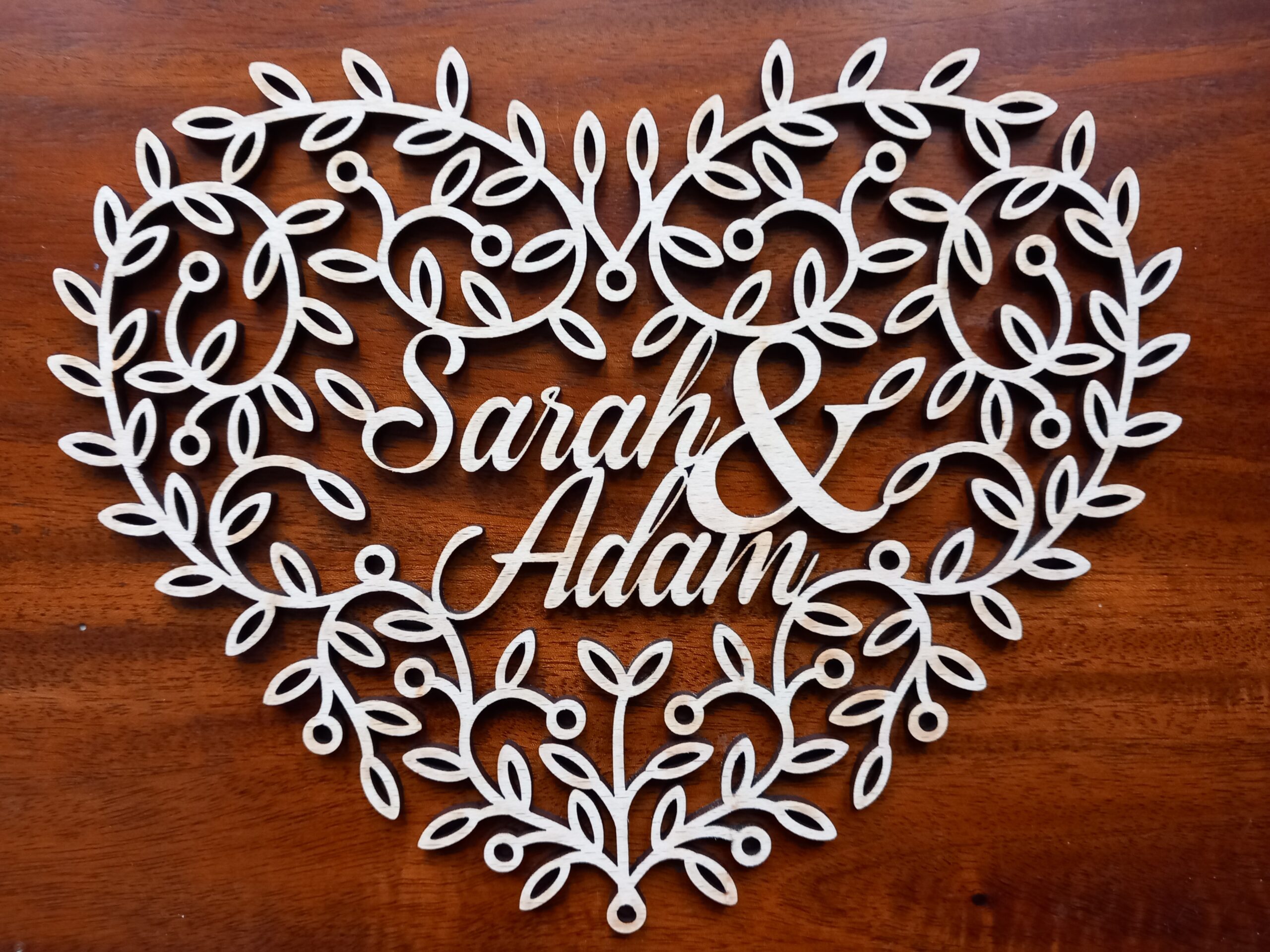
Following on from yesterday’s papercut Valentine heart design, I have now cut the same design, to get a filigree Valentine heart woodcut:
Here is a YouTube video of me cutting it with the laser machine (an Epilog Fusion Edge).
I’m really pleased with how these look – either as papercuts or from wood, and at small or large scale.
In fact, I’m so pleased with the design that I’m going to put it for sale on my shop. Woohoo! Or rather, Woo Commerce!
While cutting this I was listening to the audiobook of Joanna Penn’s newly-released “How to Write Non-Fiction” (second edition). There are a LOT of useful tips in there, which I will hopefully be putting into practice later this year. I am feeling very creative at the moment, and so 2025 seems like I might be able to plan ahead far enough to actually start achieving some goals.
I’ve got loads of projects and designs that I’m working on, so I hope they all turn out as well as this design. This is what the filigree hearts look like when they’ve been cut out and are hanging up on a wall:
Do you like the design? Could I improve it? Let me know in the comments below!
Continuing with my ongoing project of “An AI made me do it”, this latest mission was a great excuse to use AI to generate an image that I could then turn into a physical object. I needed a birthday card for my dad, and I wondered if AI would be able to help me. Normally I like to do papercut cards for family and friends, so this project became “Papercut birthday card for my dad”.
I logged into ChatGPT/DALL-E, and gave it the prompt:
As a first attempt, I thought this was amazing. DALL-E even added an envelope! I was impressed that most of the design could actually work as a papercut. There were very few isolated elements that would fall out if they were cut exactly as shown. However, there was a confusing section near the middle of the design where two elements were layered together (the snail or spiral on top of a flower shape).
At the same time, DALL-E also created this card…:
…which I would have immediately tried to cut out – if only it didn’t very clearly say “THUD” right in the middle. What on earth?!
So having discovered that DALL-E knew what a papercut birthday card looked like, I gave it another prompt:
“Great! Please could you include some little light aircraft in the image?”
At first sight these were amazing again, but:
they both had non-standard spellings of “Birthday”,
The left card was almost impossible to turn into a card without a lot of work,
Most of the planes didn’t look feasible as 2D paper objects.
Try, try again…
As usual, just when I thought that the AI was going to produce a fantastic result with the next image, we ended up having a fight instead. It either mis-spelled words (including “Dad”!), or presented the image at a sloping distorted angle, or came up with a design that would be impractical as a papercut.
Also as usual, the designs were nearly right, not really right. Here are some of the rejects:
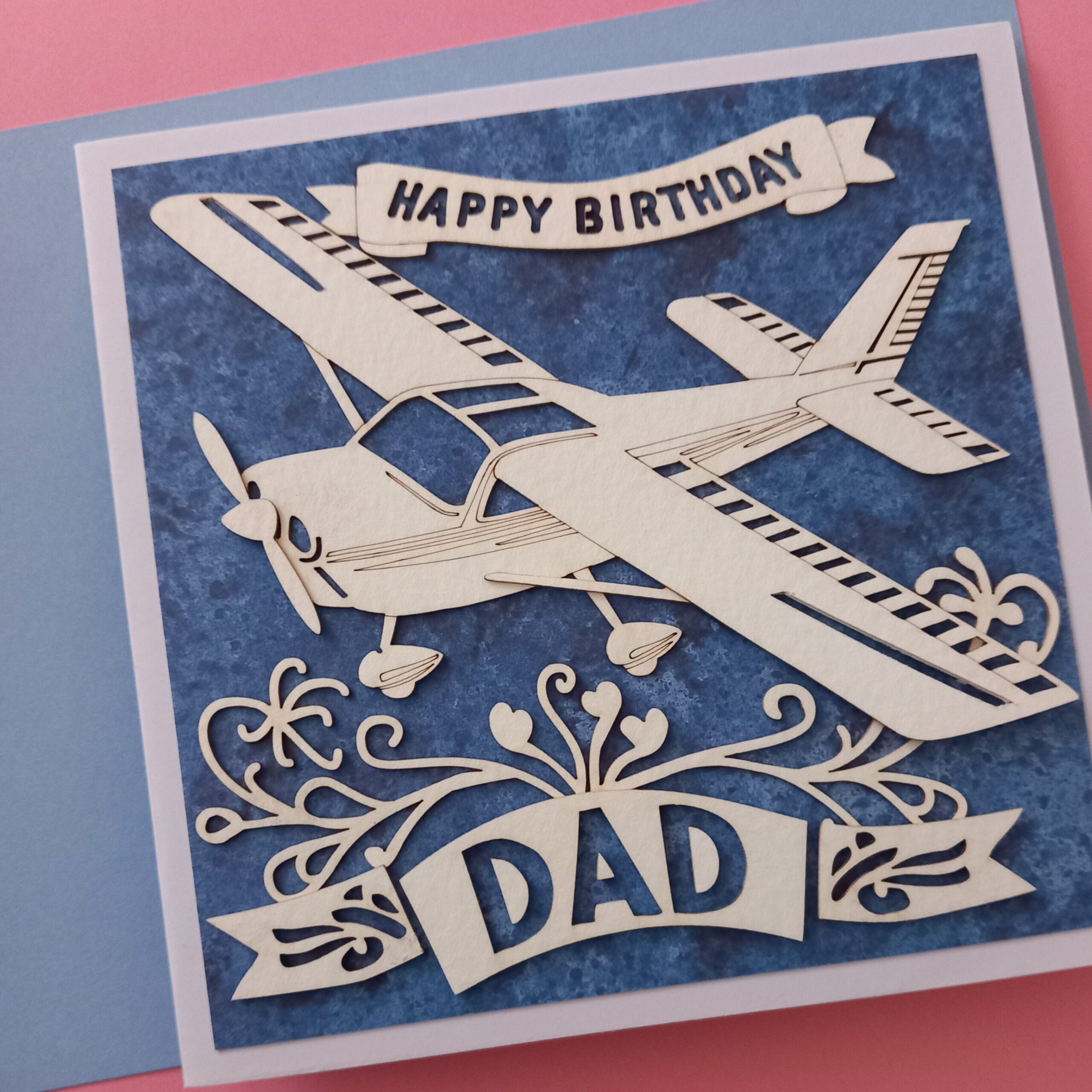
In the end I just had to pick one that looked possible to cut without many adjustments:
I printed it out on a normal piece of printer paper, then used that printout as a cutting template.
Here is the hand-cut version that I produced first:
…but then I continued to work on a laser-cut version. To do that I used Linearity Curve, which has an ‘auto trace’ function. Auto trace converts JPG files (i.e. photos) into vector graphics (i.e. collections of flat shapes). Auto trace sometimes makes little errors with the shapes (but is still way faster than tracing around the images by hand), so afterwards I edited the nodes of the vector shapes to try to get them to match the original image a bit better:
(The little white dots on the plane are nodes that can be moved around.)
…and here is the physical laser-cut version (on the right), next to the original AI design:
How well did the AI follow my prompts?
I would say about 8/10, for this project. Very successful! Most of the designs looked like papercut birthday cards. And all of them (when requested) contained light aircraft. However – as mentioned several times before in this ongoing series of projects – creative spelling was the opposite of useful or helpful.
How close is the physical version to the original AI design?
I’m going to say it’s about 85%. The differences are:
I didn’t cut out all of the sections that were cut out in the original design – I just etched them instead.
I changed the tail section because if I’d cut it out then lots of the pieces would just have dropped out. (Also, the stripe extends forward from the tail, which doesn’t look quite right.)
Some of the swirly bits have been simplified.
I couldn’t find any dark green card or paper to mount the plane on, so I chose a speckled dark blue piece instead.
The letters in the “Happy Birthday” banner had to be converted into stencil-type letters (otherwise the central sections of the As, Ps, B, D and R would have dropped out).
The elements where I just left the AI design and didn’t make any changes:
The outline of the plane
The design of the banners.
Lessons learned
ChatGPT is great at papercut birthday card designs.
Things I still need to learn or improve
Actually I’m pretty pleased with this project. Even the ‘duds’ had lots of elements in them that I felt could be used in future projects.
Homework:
Convert at least three of the AI’s original designs into actual cards.
Thanks for reading this post. If you’ve got any suggestions of prompts – or if you’ve been experimenting yourself with AI-generated images – I’d love to hear about them. You can either comment below or send me a message via the Contact form.
Even on holiday I always have my eye out for laser-y items. And better still if they happen to come in the form of my favourite souvenir…which is a fridge magnet. I like laser-cut fridge magnets so much that I’ve created a special category for them here. So last week when we were on holiday in Porto I was very happy to find a laser-cut fridge magnet.
Laser-cut ‘Porto’ fridge magnet
I think this one shows the river and the Dom Luís I Bridge and the city very well. The typical rabelo boat (carrying its barrels down the Douro river) sort of gets lost in the background – but then compensates by physically standing out from the flat surface. (I’m not sure how the boat could be made to stand out better – maybe cut it from darker wood?) I couldn’t see any details of the artist or manufacturer, but if you know who it is, please let me know and I’ll credit them here.
Closer up:
Here’s the fridge magnet from a different angle – looking straight down at it:
The boat shows up a bit better in this one, but the Dom Luís I Bridge still looks like the star of the show. Mind you, it is a very impressive bridge! And it definitely does stand out in real life. Apparently it was designed by a student of Gustave Eiffel (as in the Eiffel Tower).
The picture is missing one of the key features of the bridge, though, because in real life it’s got two different levels for the different modes of transport across it. Top level: get a Metro tram-thing across the top of the bridge (or walk across as a pedestrian). Lower level: use the road for a car or bike (or walk across that one, as well).
Anyhoo – I like my new fridge magnet, even if it uses quite a bit of ‘artistic licence’. I like the way that they’ve made it into a serrated stamp-shape as well. It just screamed ‘souvenir!’ at me, so that’s another reason I chose it. And now I’ve got another laser-cut piece of artwork on my fridge door, plus some lovely memories of our holiday in Porto/Oporto.
In the meantime I’ve been having laser-cut-fridge-magnet adventures of my own, but more about that later…
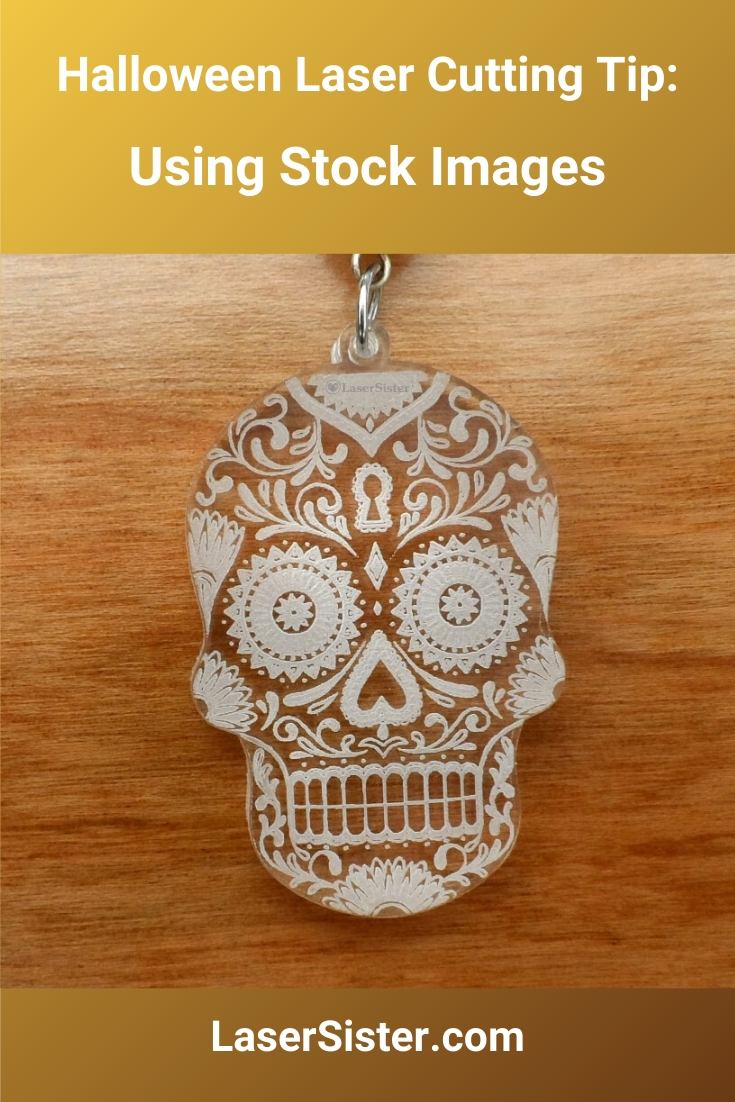
Here is a lasercut sugar skull pendant – Happy Halloween!
OK, sugar skulls are traditionally more of a ‘Day of the Dead‘ thing than Halloween, but what the heck 🙂
Lasercutters: Can’t be bothered to design your own sugar skull? Why not buy a licence to use someone else’s design? (That link above is to a post I wrote a while ago, about why and how you can fast-forward your lasercutting business by using stock images and designs.)
That’s actually what I did in this case. The design is brilliant and so detailed, and etches really well – so why re-invent the wheel? I bought the extended licence and now I am able to cut and sell this design in my own business. As well as Halloween lasercut sugar skull pendants and earrings, I’m also hoping to adapt it into a papercut version. That might take a while though. Maybe by next Halloween…
I got this particular sugar skull design from Vectorstock (that’s an affiliate link, by the way. Not that I’ve yet made any money from any of my affiliate links, but they are only a minor part of this blog – I just enjoy sharing (and discovering) lasercutting skills and news!)
The best thing about clear acrylic jewellery is that it goes with anything! It’s like wearing a chameleon. Hmm. I might make one of those, one day…
Here is something I’ve been playing with this week – the design of a laser-cut jewellery holder.
I made one for my mum last Christmas…
As you can see, it can hold lots of different types of jewellery (rings, necklaces, bracelets, watches, earrings). However, it still needs some tweaks.
What I like about it is:
As mentioned above, it can hold nearly all types of jewellery. The only exceptions I can think of at the moment are hat pins, scarf pins or brooches.
You can see all of the jewellery in one place. It’s not in a drawer or box, so you get to enjoy your favourite pieces like mini artworks.
It’s personalised and therefore unique.
It’s versatile, so (e.g.) the same horizontal bar can take either hook-type earrings or post-type earrings, and the vertical side bits can hold either rings or bracelets or watches.
Things to improve on the design:
Create a way to hang it so that it is held away from the wall, to make it easier to hang earrings.
Have a way to store brooches and pin-type jewellery (e.g. a tray at the bottom)
As a very basic version though, this is the design that I used:
If you’ve got a laser cutter and you’d like to have a play with this design yourself, I’ve made a vector file available below.
We got back from holiday last week and only just finished unpacking today – and I’d forgotten that while I was on holiday my eye had been caught by several laser-cut souvenirs.
This one is a laser cut souvenir fridge magnet from Belogradchik Rocks, in Bulgaria. Mmmm, laser-y!
I like the way that it has two layers to it. But whoever made it has left quite a bit of scorching/smoke-marking on the front, and I’d be really disappointed if I sold a piece like that. On the other hand, I’m too much of a perfectionist. Weird how it didn’t stop me buying a piece, but it would stop me selling one. Maybe I’ve got things the wrong way round?!
Following on from yesterday when I was excited to find my blog in the top 40 of laser cutting blogs, I have been checking out other blogs on the list and here is a digest of my own favourites (along with the country they are in, in case you are looking for laser cutting services):
Gypsy Soul Laser Cuts (USA) is a lovely blog, with regular updates and lots of craft ideas. They sell laser-cut craft items.
Dragon Powered (UK) has got laser cutting files for sale, to save you having to spend hours designing your own. The blog includes interesting and original information, and technical advice.
Nice Cuts (UK) provide a laser cutting service, and have ideas about how you can use laser cut designs for your own business. They also occasionally have guest bloggers, who share their own experiences of using a laser cutting service.
CUT-TEC (UK) are a laser cutting service and they create really varied laser cut items – including in metal.
Mekkit.com (UK) are another company who produce really varied laser cut products, and have some great photos of their work.
The Altered State (UK) have got at least one great big laser and can cut and etch reeeeally big items.
LaserSister (UK) That’s me! I provide a laser cutting and etching service, but the blog also has technical information about laser cutting, plus news and trends from the lasery world. And will shortly include links to cutting files.
MBJD Laser (USA) seem to pick a different font colour and overall style for every blog post, but I forgive them because they are real people and giving real news about their laser cutting service and products.
Laser Flair (UK) have a laser cutting service and look like they can etch metal and giant pieces of wood for you.
Dot Laser (UK) produce really nice-looking and varied work for clients.
Bespoke Laser UK also produce great looking products, and do an especially nice line in laser-etched bespoke rubber stamps.
LASERCUTIT (UK) have a laser cutting service, for wood, acrylic, paper and card.
Just Add Sharks (UK) have got an article on making a totally mind-blowing ‘phenakistiscope’.
CutLaserCut (UK) work with artists and other businesses to make some really original pieces.
Ponoko (USA, NZ) allow you to upload your artwork, get an instant quote, and then cut and ship the item on the same day. WOW.
Reddit (www) has a thriving laser cutting community and this is a great place to browse and/or ask questions. It does contain quite a bit of spam, but you can easily lose hours just browsing if you are really into laser cutting.
MLC (AUS) have a laser cutting service in Australia, and the blog includes latest trends and news from the lasery world.
Able Engraving (UK) have a traditional engraving service as well as laser engraving, and are experts in signs and awards.
Google News (www) chews up and spits out laser-related news for your information and delight.
(OK, there are only 19 in my current Top 20 list. But the Top 40 list only had 33, so I win!)
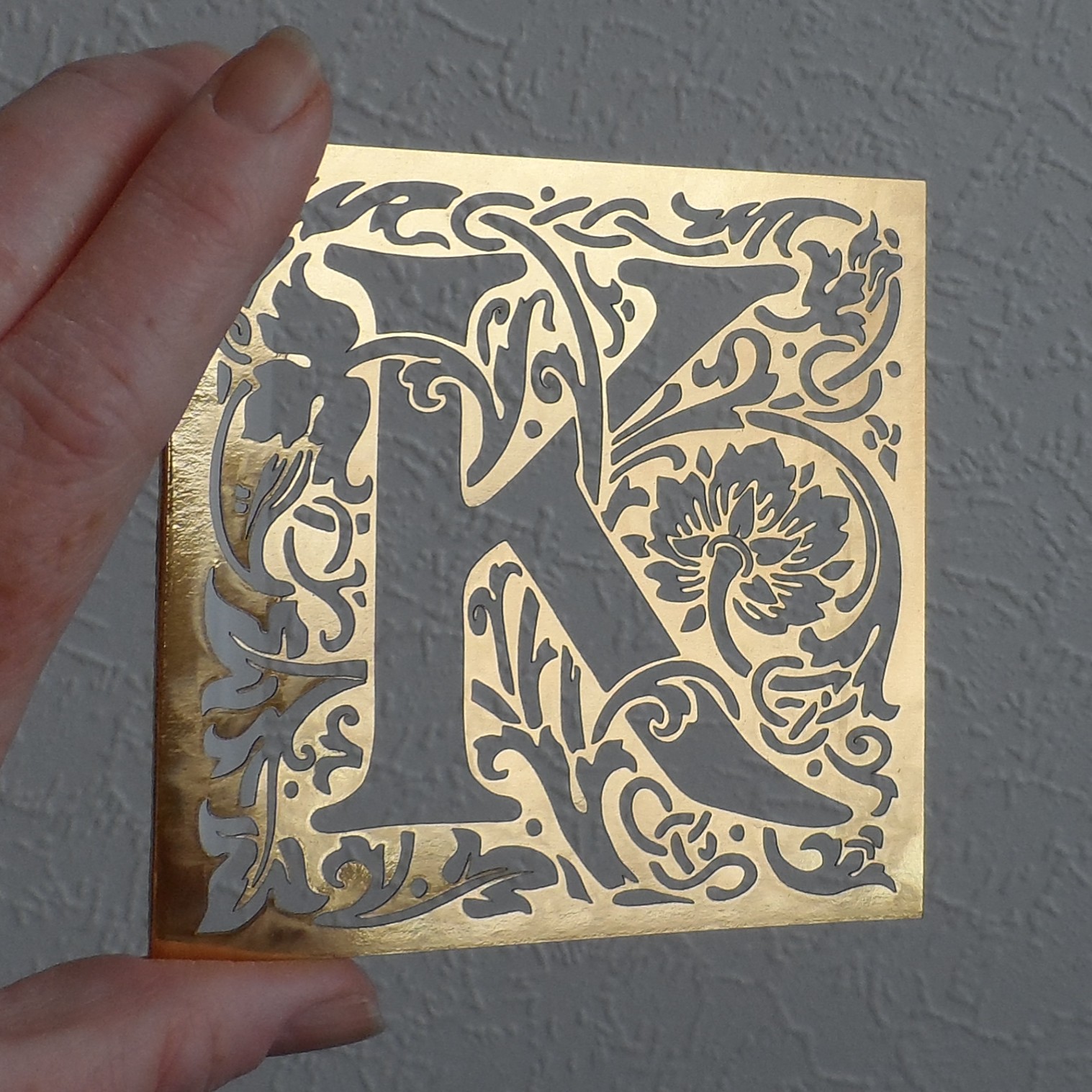
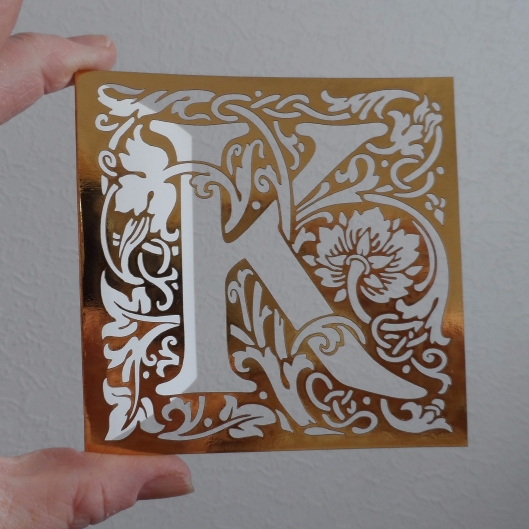
Over the last couple of days I’ve been working on a new set of cards, and here is the newest one; a William Morris (arts & crafts movement) style “K” card:
Small Square William Morris Style “K”
It can also be made as a card topper, which could be mounted on a bigger card:
William Morris style letter “K” laser cut card topper.
This website is being updated daily at the moment as it migrates from our previous provider, but here is a sneak preview of one of the pages that will shortly go live:
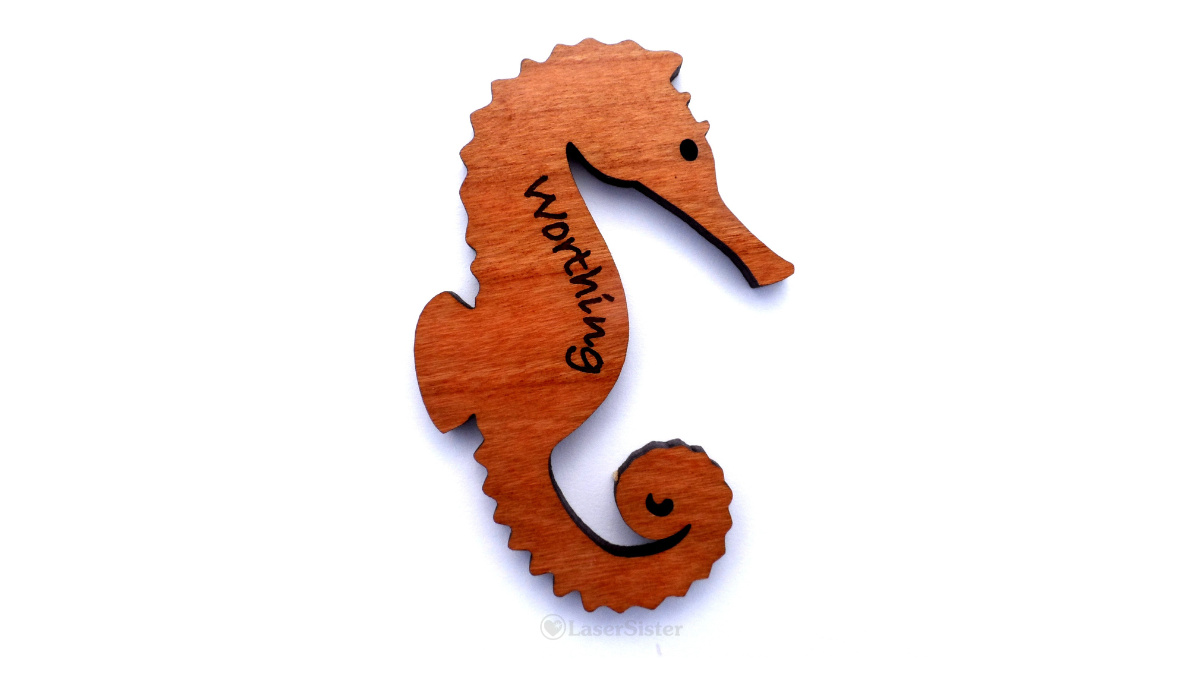
The Fridge Magnets page shows a range of recent (sea-themed) products. They are made from 3.6mm(ish) thick cherry wood laminate and can be etched with a place name or just left blank.







 I like the way that it has two layers to it. But whoever made it has left quite a bit of scorching/smoke-marking on the front, and I’d be really disappointed if I sold a piece like that. On the other hand, I’m too much of a perfectionist. Weird how it didn’t stop me buying a piece, but it would stop me