Posted on Leave a comment

More Marquetry

Yorkshire rose coaster marquetry project - Kay Vincent - LaserSister

More marquetry news this week: I’ve won first prize in the “Beginners’ Applied” category of a marquetry competition – wow!

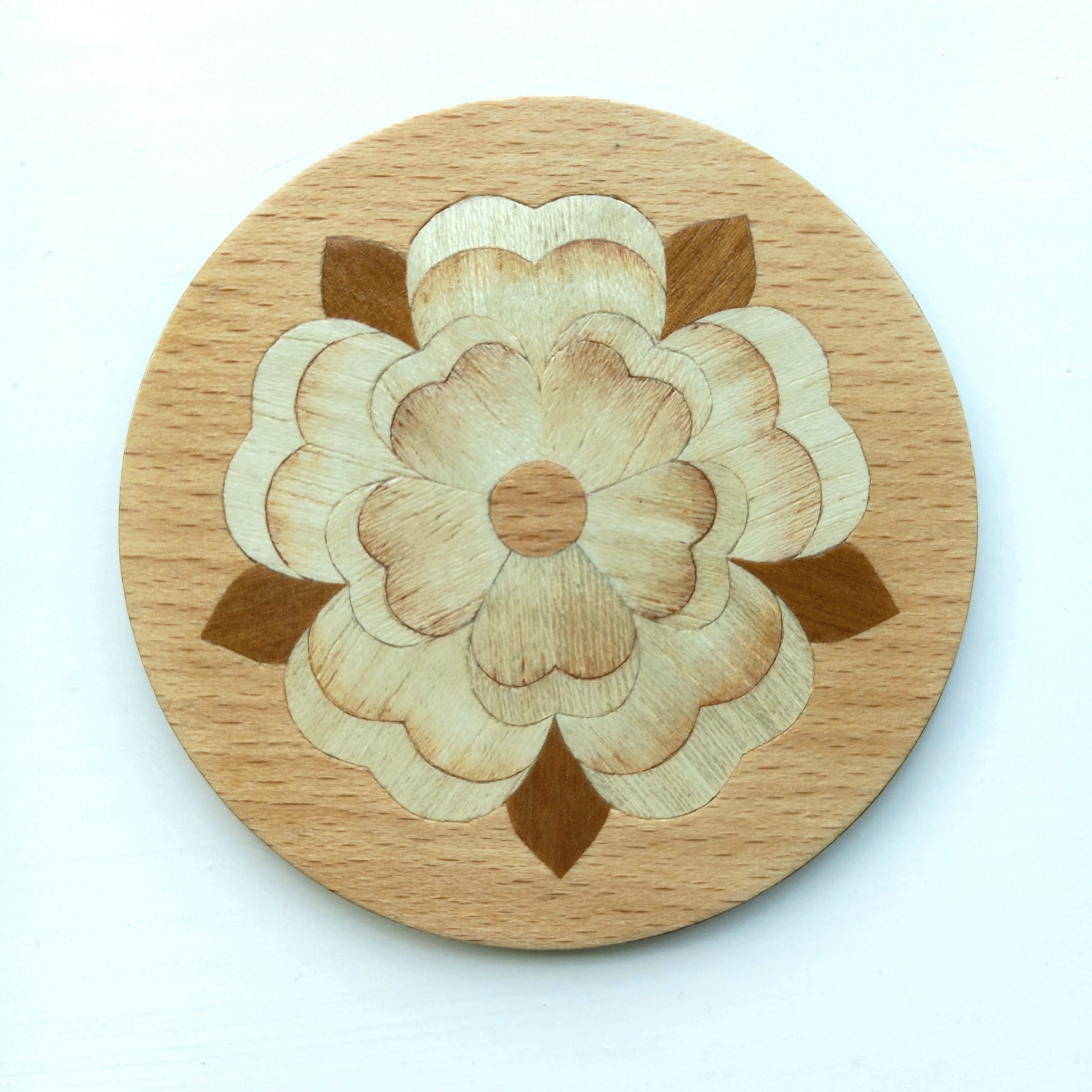
I’ve been really enjoying my membership of the Leeds Marquetry Group, and last week I entered their annual competition. I submitted the Yorkshire Rose coaster, which was the very first marquetry project that I’d ever completed (and which I wrote about in July here).

Yorkshire rose coaster marquetry project - Kay Vincent - LaserSister

I created the design myself, and based the petals on heart shapes. Then found a really pesky, tricky wood to cut it out of. (For such a therapeutic hobby, I do seem to find myself inventing a surprising number of new swear-words.) Then I covered the coaster with a heat-resistant and water-resistant melamine sealant, gave it to my dad as a birthday present, only to pinch it back again to enter it into the competition.
Posted on Leave a comment

Wedding Papercut

Natalie _ Oliver papercut - Kay Vincent - LaserSister

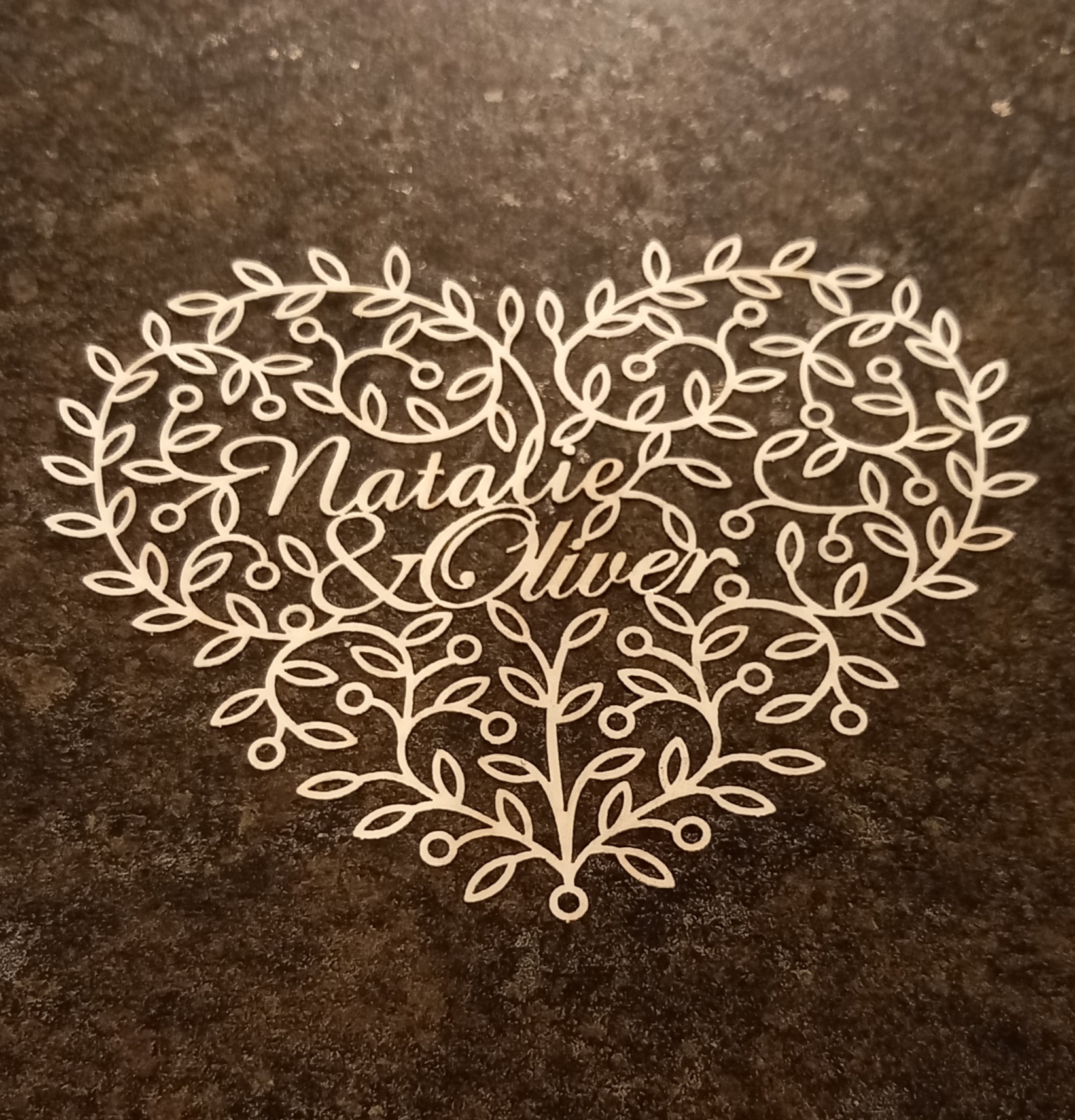
This is the most recent wedding papercut that I’ve created.

I did originally create a design that just used the initial letters of the two people, but the trouble with couples who have the initials of “N” and “O” is that it looks like the artwork is spelling out “NO”. Which isn’t a very auspicious message for a wedding gift. So I decided to spell out their names in full, after all.

First I tried cutting the piece with my lasercutter, but the result wasn’t as good as I’d hoped for. The laser-cut edges of the designs were just a bit too brown and toasted. So I cut the design by hand instead, to ensure that the edges of the paper stayed their original colour. Then I framed the piece in a “shadow box” frame. (It’s taken me years of experimenting and searching, to finally find the right type of frame for this type of papercut. Would you like a tutorial article on how to frame papercuts like this? If so, please let me know via the comments section or the Contact page. )

Natalie _ Oliver papercut in frame from side - Kay Vincent - LaserSister

Creating the design

The leafy/berry-y elements of the wedding papercut design came from an SVG file that I bought from Vectorstock.com. I’ve mentioned Vectorstock here before, but basically the idea is that to save time, you don’t want always to draw a completely new design from scratch – especially if someone else has already created a lovely design to begin with. Buying an expanded licence allows other artists to buy the SVG file and then sell their own artworks, based on that design. With this system the original artist gets a payment from other artists who want to use their design, the customer-artist gets to save time when creating their own artworks, and the customer-artist’s own customer gets an artwork that is totally unique but is usually a lower price than if the papercutting artist designed every single element of the design from scratch . Win/win/win!

Natalie _ Oliver papercut in frame from front - Kay Vincent - LaserSister

Posted on Leave a comment

Marquetry goldfish

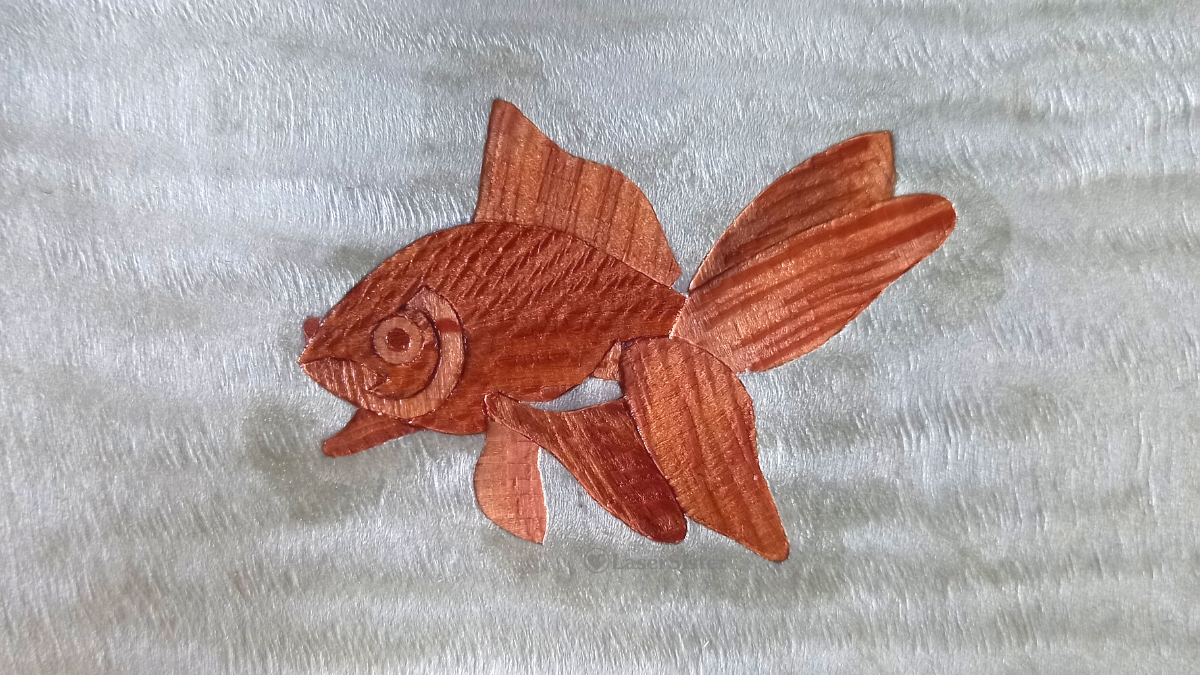
As mentioned in this post, I have recently taken up marquetry and I’m really enjoying it. I am now always on the lookout for new projects. This week I’ve combined marquetry with another hobby (fishkeeping), and have cut out a goldfish design. Because I’m still at the learning phase I’m cutting everything by hand, but at some point I’ll probably start to combine hand-cutting with laser-cutting.

This is what I’ve managed so far:

Marquetry goldfish square watermarked - LaserSister - KayVincent

Stages of making the marquetry goldfish

First I chose a piece of veneer. It’s impossible to tell from this photo, but the piece had been dyed to a light greeny-blue shade. Once I’d found the nice wood I traced a basic fish design onto it.

Marquetry goldfish step01 square - LaserSister - KayVincent

Using the ‘window method‘ of cutting, I started with the dorsal fin. I deliberately made bottom end of the cut longer than it needed to be, so that I could use the inserted fin as part of the window of a later section. So it didn’t matter that there was a gap at the bottom left of the fin.

Marquetry goldfish step03 square - LaserSister - KayVincent
Selecting a suitable piece of wood by viewing it through the window

Then basically I kept repeating the steps of:

  • cutting a window shape out of the greeny-blue veneer (e.g. fins, body, tail sections)
  • viewing the orange-coloured veneer through the window so I could find a woodgrain that looked as fishy as possible
  • using that window as a guide for cutting the right size of orange-colour veneer to insert into the window
  • glueing (?gluing? Both spellings look wrong) the freshly-cut orange veneer piece into the window.
Marquetry goldfish step04 square - LaserSister - KayVincent
Cut a window, find a suitable grain of wood, cut the shape, and glue it into the window

Wonderful woodgrain

This is one of the things I like most about marquetry; the way the woodgrain pattern makes each piece absolutely unique. Here the grain not only has lines in it but wavy lines, so the goldfish tail looks even more realistic. And of course, the lines in the greeny-blue wood look nice and watery.

Marquetry goldfish step05 square - LaserSister - KayVincent

More fins being added:

Marquetry goldfish step06 square - LaserSister - KayVincent

Pectoral fins cut and inserted:

Marquetry goldfish step08 square - LaserSister - KayVincent

Bottom section of fish tail has been cut and inserted. Again I was pleased to find some grain that had a bit of a wave to it.

Marquetry goldfish step09 square - LaserSister - KayVincent

I thought I’d gone horribly wrong here, because it looked like I’d added a clown’s nose to the fish:

Marquetry goldfish step10 square - LaserSister - KayVincent

…but when the body was cut and inserted, I was very relieved because the nostril thing didn’t stand out much after all. (Note: at this stage the inserted body-section replaced the bottom of the dorsal fin, so removed the previous gap.)

Marquetry goldfish step11 square - LaserSister - KayVincent

I was also quite chuffed with the way that the woodgrain looked a bit like fish scales:

Marquetry goldfish step11 square - LaserSister - KayVincent

Fin-ishing touches

Nearly finished, with the mouth and gill inserted, and a window cut out for the eye. The single mouth-and-gill shape was a really difficult shape to cut out. I could have made things easier by cutting it as two pieces instead of one, but fortunately nothing broke while I was doing it.

Marquetry goldfish step12 square - LaserSister - KayVincent

I forgot to take a picture of how I cut the eye, because it all got a bit tricky at this stage. Here is the finished marquetry goldfish:

Marquetry-goldfish-square-LaserSister-KayVincent

The outer section of the eye is just under 5mm in diameter so was fiddly enough to cut by itself, but then I had to cut a 2-ish mm hole out of the middle of it so that I could insert the smaller, darker circle. No finesse at all was involved; I had to just hack away with my scalpel until I’d managed to carve out a hole from the wood.

Marquetry-goldfish-square-LaserSister-KayVincent

Posted on Leave a comment

Marquetry at the Great Yorkshire Show

marquetry initial letter coasters - Kay Vincent - LaserSister

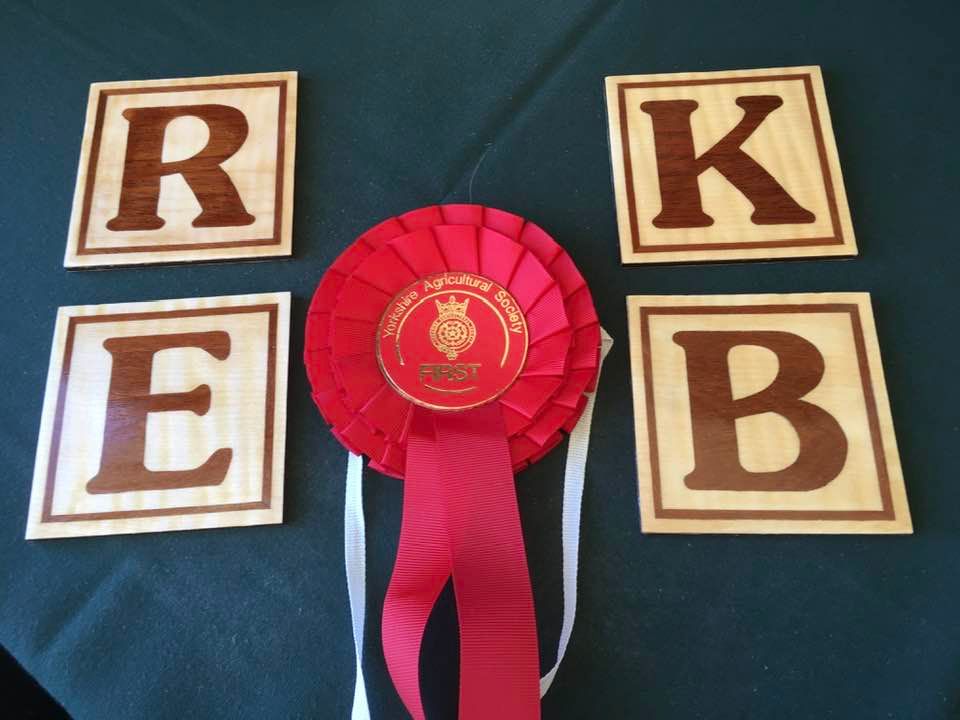
Having mentioned in a previous post that I’d started a new hobby of marquetry this year, I was excited to find out this week that one of my competition entries for the Great Yorkshire Show had won a prize. I really am addicted, now!

The Leeds Marquetry Group encouraged all of this year’s (2022) beginners to submit some of our pieces to the GYS, so for the last few months I’ve been tinkering away with several projects and trying to expand my range of skills.

I turned up at the woodworking tent of the show hoping to have a nose around and see what everyone else had been working on this year, and was amazed to discover that I’d won first prize in the category of “applied” marquetry:

marquetry initial letter coasters at the Great Yorkshire Show 2022 - Kay Vincent - LaserSister
(Photo taken by Eileen)

I’m still sure there must have been some mistake! But what I really loved was that all four of the initial-lettered people were there to see their coasters. I hadn’t shown any of the coasters to Rob (husband), Eileen (mum) or Brian (dad) during the time that I was making them, so there were nice surprises all round.

I created the design by first printing out the letters in a giant font size and then drawing square borders around them. Then I used Saral transfer paper to copy the design onto the wood veneer sheets.

Try, try, try again

This was my first ever attempt at hand-cutting wood veneer. When I cut out the K and the background I was fairly happy with the outcome…

nitial-letter-K-coaster-in-progress-Kay-Vincent-LaserSister

…but then noticed that I’d cut the letter too close to the edges of the background veneer (above), so had to start again.

initial letter K marquetry coaster wrong wood - Kay Vincent - LaserSiste

…only to decide that I’d like to make a whole family set of initial letter coasters – at which point I realised that I didn’t have enough of those two veneers above (cherry and birch??) to make a matching set. So I had to start again again.

Favourite wood so far…

I went up to LMG’s wood store, and discovered a lovely veneer. Fiddleback sycamore. Apparently it’s called that because it’s used on the backs of violins and other similar musical instruments. It is a very very attractive wood:

fiddleback sycamore veneer - Kay Vincent - LaserSister
Woof. It’s got a silky, wavy pattern somehow at right angles to the grain.

For a good contrast with the sycamore, I chose a much darker and more grainy-looking wood. I think it’s sapele wood.

Making things (more difficult)

To make life difficult for myself, I decided to try to keep the outer section of the sycamore veneer in one piece. But I also wanted to learn how to apply a border strip (‘stringing’?) around the main design as well, so I mitred some thin sections of the sapele wood and somehow got them to fit between the pieces of the sycamore veneer.

initial letter K marquetry coaster with fiddleback sycamore wood - preparing for the Great Yorkshire Show - Kay Vincent LaserSister
Work in progress, with the two new woods.

That was actually the second most difficult part of the whole project. I must have wasted about 10 strips of wood trying to get them to the correct width and length and fitting nicely together and properly mitred.

By the time I started on the letter R coaster I was a bit more confident with my cutting skills:

initial letter R marquetry coaster from front

…but was horrified by the gaps between the veneers when I held them up to the window:

initial letter R marquetry coaster - Kay Vincent - LaserSister

Fortunately my new friends at LMG assured me that when I actually glued the veneers together and stuck them to the coaster itself, the gaps wouldn’t be as noticeable. Partly because the glue fills in the gaps anyway, but also because the wet glue causes the wood to soften and change shape a bit. The tutors also kindly reminded me that nobody else in the world was going to hold one of my marquetry pieces up to the light to inspect it. Duh.

As part of my marquetry adventure I also discovered a new phenomenon: my pieces always look better from the back than they do from the front!

initial letter R Great Yorkshire Show marquetry coaster from back - Kay Vincent - LaserSister
Posted on Leave a comment

New Hobby: Adventures in Marquetry

Yorkshire rose coaster marquetry project - Kay Vincent - LaserSister

This year (2022) I started a new hobby. I am now a marquetry enthusiast (in addition to all of my other craft addictions).

I moved house in 2021 (from the south to the north of England) during the covid lockdowns, so for a very long time I wasn’t able to start any new hobbies that involved seeing real people. But in February 2022 I was wishing for a new group or club to join in Yorkshire, and discovered that Leeds Marquetry Group were restarting their beginners’ sessions that very same week. So I signed up. And it turns out that marquetry is a brilliant pastime for me, because it seems to combine a lot of the skills that I’ve already been building up via my other crafts, over the years.

Through my papercutting experiments I’ve already learned how to use a scalpel to do some very intricate cutting…

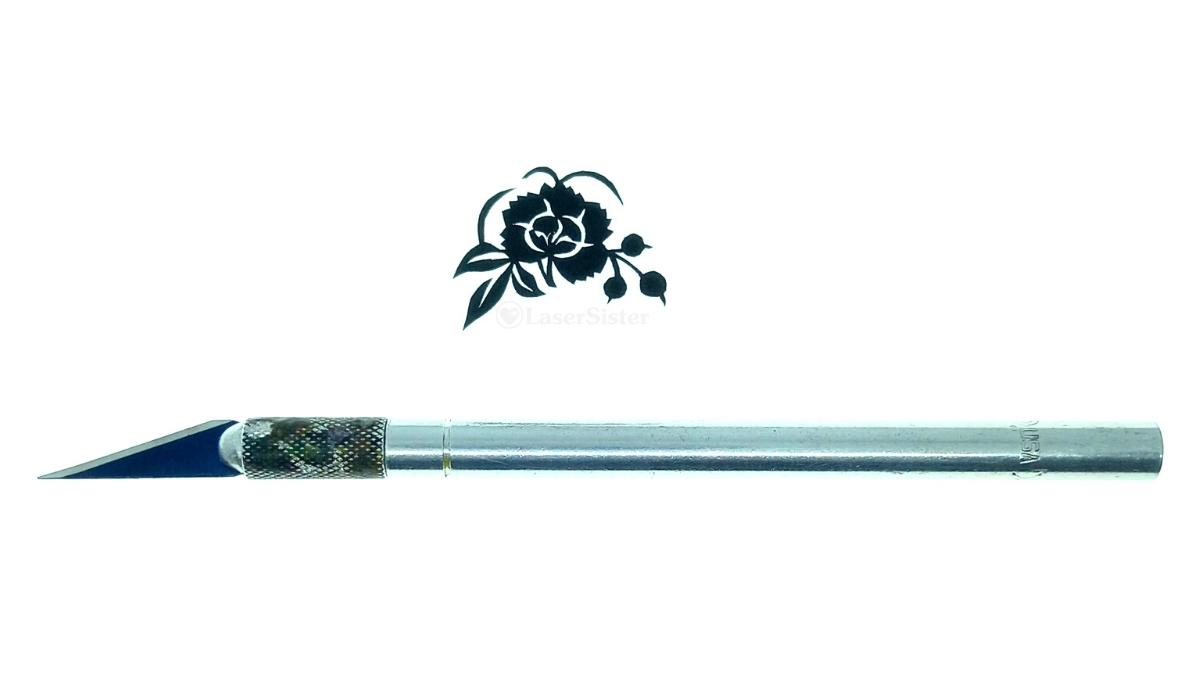
papercut 224 - Chinese flower with horizontal scalpel - Kay Vincent LaserSister

…and through my lasercutting artworks I’ve learned some of the characteristics and limitations of working with different types of wood veneers:

LaserSister trademark logo as laser-cut marquetry heart - background removed

So marquetry basically involves a mash-up of my existing craft skills.

The very first project I completed was a Yorkshire Rose coaster:

Yorkshire rose coaster marquetry project - Kay Vincent - LaserSister

As with my papercutting projects there are quite a few errors that really jump out at me when I look at this piece, but overall I’m really pleased with it. I designed it myself (starting out with petals that were based on heart shapes) then cut it by hand, and there were some really challenging sections in it.

The best thing about Leeds Marquetry Group is that everyone is so friendly and helpful. In just a few months I’ve learned more about cutting, gluing, sanding and varnishing wood than I could have ever learned from books or the internet. I’m looking forward to learning even more, over the next year.

Posted on Leave a comment

Chinese Flower (papercutting project design: 224)

papercut 224 - Chinese flower with horizontal scalpel - Kay Vincent LaserSister

This Chinese Flower design is from an ongoing papercutting project that I’ve been doing (where I’m trying to work my way through all of the designs in the “922 Decorative Vector Ornaments” book by Dover Books.)

I was doing pretty well with my papercutting during the Covid19 lockdowns, but then we had to:

  • sell our house
  • move to another part of the country
  • get new jobs
  • sell my husband’s flat
  • buy a bungalow for husband’s mother
  • rent out the bungalow because mother-in-law had a fall and couldn’t live in it
  • help m-i-l move to a care home
  • sell m-i-l’s flat
  • start renovating our new (old) house

I also had to pause my PhD. Bummer. But last I’m sort of getting on top of things, and can occasionally find time to relax and do some crafts again. So here we are with another design cut from the “922 Decorative Vector Ornaments” book. This week’s design is number 224 in the book:

papercut 224 - Chinese flower with vertical scalpel - Kay Vincent LaserSister

Closer up:

papercut 224 - Chinese flower close up - Kay Vincent LaserSister

I’ve called this one “Chinese Flower” … because it looks like a traditional Chinese papercut, and features a flower.

This piece was reeeeally small, so overall I’m pretty pleased with how it turned out. The cutting is mostly accurate and I didn’t cut off any crucial parts of the design. The only flaw that leaps out at me is the middle of the central stripe in the top leaf, where there is a little kink in the design:

papercut 224 - Chinese flower close up - Kay Vincent LaserSister

…but that’s only if I’m being super-critical. If I were that bothered by it, I could get my scalpel out and tidy it up.

In terms of the actual design, I like this one. It does have that traditional Chinese papercut style, which is something that I enjoy looking at. I could see myself using this design as part of a papercut greetings card, or maybe on wedding stationery.

While I was cutting it I was listening to one of Lee Child’s Jack Reacher books. I’ve listened to a lot of them recently and they tend to merge into each other in my memory, but I think it was One Shot. I never thought I’d get into Jack Reacher books, but then I ran out of my preferred audiobook genres in my library’s app so had to expand my repertoire. Turns out I really enjoy action/thriller type books.

Any comments? You can chip in via the comments page, or Facebook, Twitter, LinkedIn or Instagram.

Posted on Leave a comment

Christmas Number One!

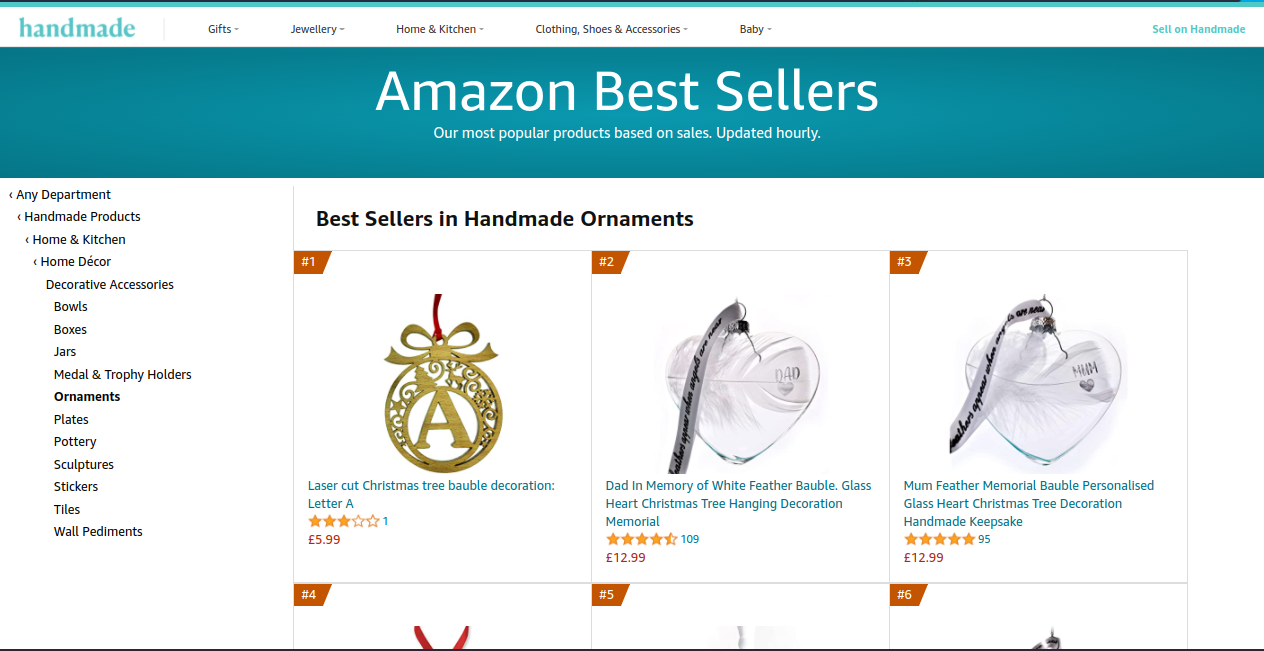
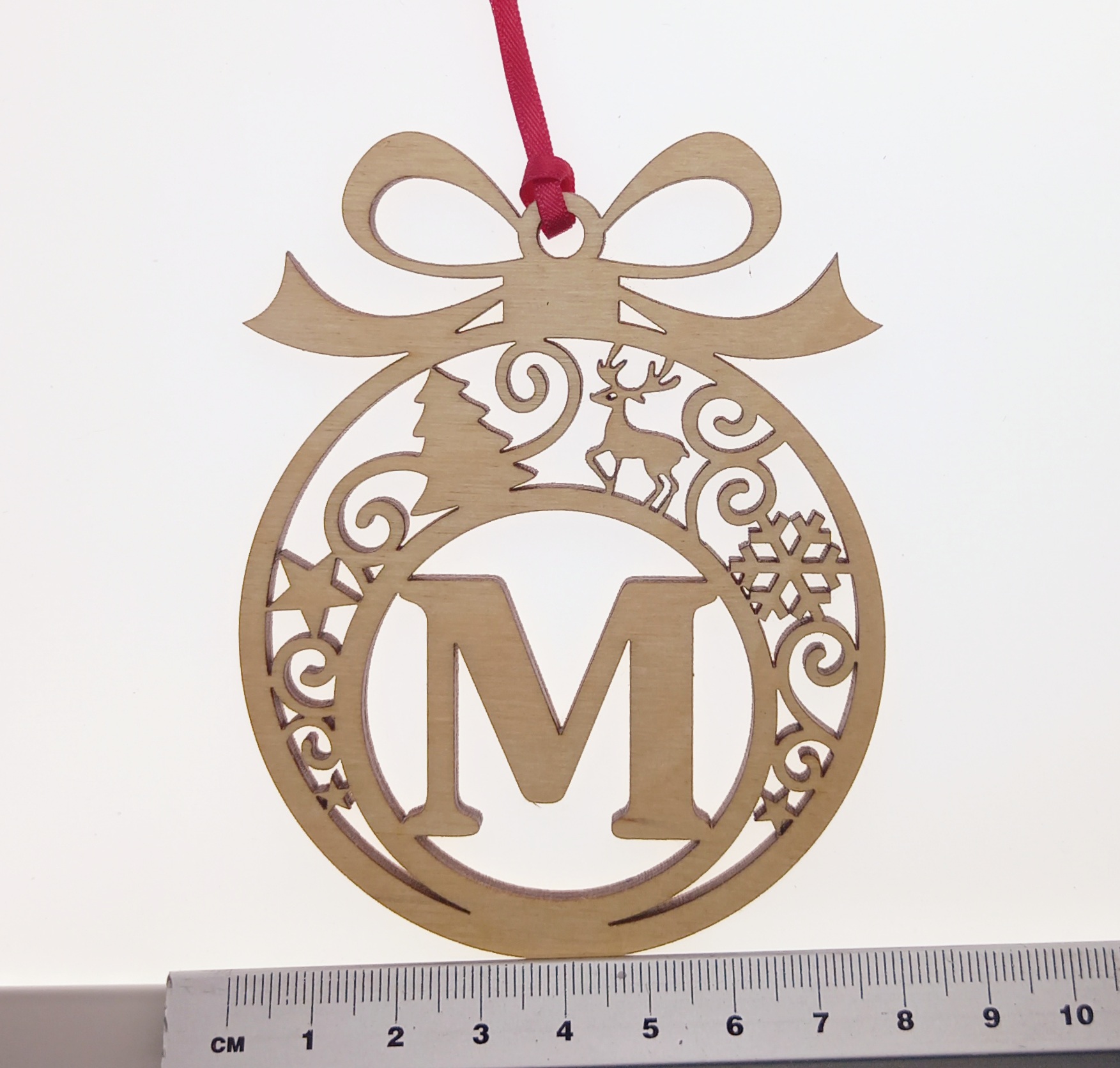
Screenshot of lasercut Christmas tree letter bauble at #1 on Amazon best seller list

Last month I wrote this article about experimenting with Amazon’s FBA (Fulfilled by Amazon) programme – where the basic idea is that sellers ship a load of products to an Amazon warehouse, then Amazon do the picking, packing and postage for them. I’ll try to remember to do a more detailed report when the dust has settled and the Christmas rush is over, but for now let’s just say that the experiment appears to have been successful. In fact it’s been so successful that I have scored a “Christmas number one” this week, and here is my screengrab to prove it:

Screenshot of Christmas letter-bauble at #1 on the Amazon best sellers list

As shown in the screenshot, my personalised Christmas letter bauble is now officially an Amazon Best Seller.

When is a #1 not a #1…?

OK, it’s a bestseller in a subcategory of a subcategory of a subcategory. But I’m still taking it as a win!

It was hard work, though. In order to get to that stage I’ve had to sell a lot of bauble ornaments. And in order to get to that stage I’ve had to make a lot of bauble ornaments. For six weeks in the run-up to Christmas it felt like my whole house was a mini factory full of baubles, wood sheets, ribbons, boxes, and wrapping materials. My family became my factory workers, and my cat became very confused.

The final batch of ornaments was only processed by Amazon yesterday (21 December), so maybe that’s too late for even Prime customers to order my products. But in the meantime I’m just going to bask in the glow of having achieved a Christmas #1 in the charts.

They keep selling out, so by the time you see this they might all be gone again. And in that case it won’t be worth looking at any of my shops. But for just this brief window in time, I’ve been able to achieve a bit of an ambition to be a chart-topper on Amazon.

I guess my target for next year should be to try to reach #1 in a higher-level subcategory. So instead of Handmade > Home & Kitchen > Home Decor > Decorative Accessories > Ornaments, I should aim for Handmade > Home & Kitchen > Home Decor? Hmm – maybe that’s a bit too ambitious…!

Posted on Leave a comment

This is why I joined Amazon FBA …

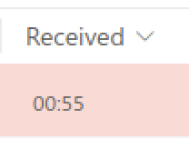
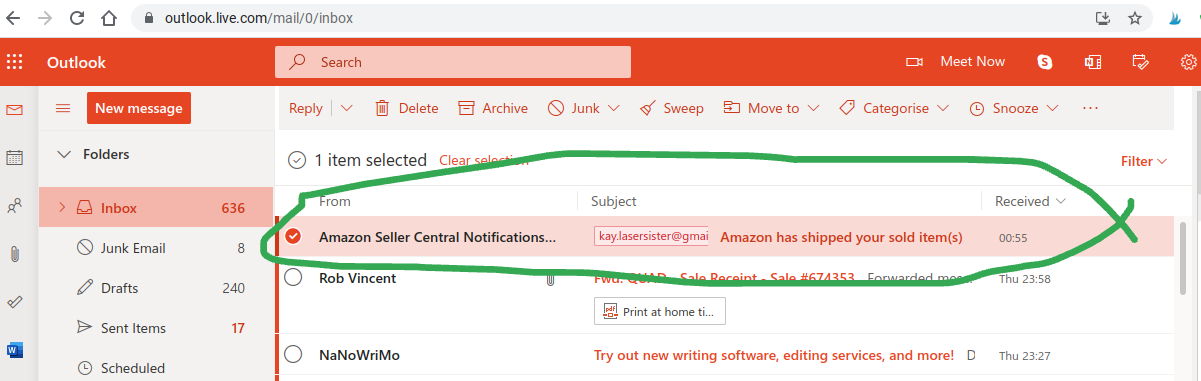
screenshot showing Amazon notification email that they've sold and dispatched something at 0055
Screenshot of why I joined Amazon FBA

Amazon FBA = “Fulfilled by Amazon”. In other words, there is an option for them not just to show your products/artworks on their giant shop, but also to ship those items to customers.

In 2018 I registered as a seller on Amazon Handmade, but it was such an exhausting hassle that I didn’t start experimenting with selling there until 2020 (here is a link to my blog post about it, and here is a link to my shop thing). Then last week I joined Amazon FBA, as another experiment to see if it would be worth doing. One week later, here is my proof:

Close-up screenshot showing Amazon notification email at 0055

Amazon are shipping items for me while I’m asleep!


Of course, they’re doing it for a hefty fee – and setting up the whole thing is a huge faff and takes ages – but I’m guessing the process will get faster/easier once I’ve done it a few times.

The other giant benefit is that as well as shipping things for me while I’m asleep, Amazon will also be multiplying my capacity for physically sending out parcels. At the moment I am the sole employee of my business, so it is my job(s) to do the following:

  • Order raw materials
  • Design items to make and sell
  • Make the items I’ll be selling
  • Pack and post sold items
  • Take photographs of products
  • Research possible new suppliers
  • Research possible new outlets
  • Update my websites
  • Add new products to my online shops
  • Attend craft fairs
  • Visit potential retailers of my products (shops, museums, galleries)
  • Restock existing retailers of my products
  • Design business cards, logo, stationery
  • Carry out maintenance on equipment
  • Deal with customer queries
  • Develop new products
  • Keep accounts updated
  • Fill in tax returns
  • Etc…

…not to mention that in the background I’ve actually got a life to live, as well.

So when I spend time on the activity of “pack and post sold items” it means that I can’t do any of the other activities at the same time. And if I can’t spend time making items, I then won’t have any to pack and post.

One drawback of using FBA is that it involves a LOT of admin, which eats up time. Another is that I still have to actually pack and post items – although it does save me some time because they are all going to the same place (Amazon’s FBA warehouse) instead of having to send them to individual customers. However as I said above, I’m hoping the process will get easier/quicker once I’ve sent a few more shipments off to Amazon.

Anyway, it’s been a very interesting experiment this week, dabbling in Amazon’s FBA programme. Now let’s see what happens at Christmas…


Have you tried selling with Amazon? Or is it an evil bloated monster squatting all over the internet and you would never even shop with, let alone allow your artworks to be tainted with its vile commercialism? Feel free to leave me a (polite-ish) comment 🙂

Posted on 1 Comment

Lockdown Papercutting Project Day 70: Daffodil

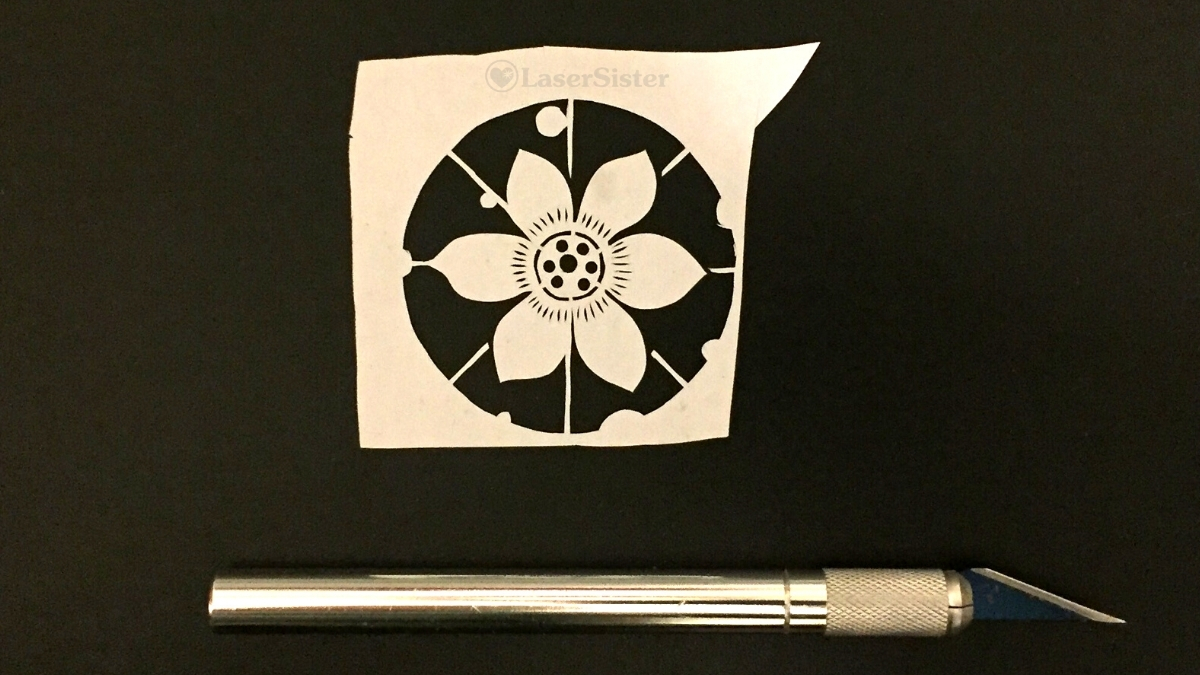
daffodil papercut - with scalpel for scale - Kay Vincent - LaserSister

Daffodil #692

This “Daffodil” papercut is from the ongoing papercutting challenge that I’ve been undertaking for aaaaages. (Basically I’m trying to work my way through all of the designs in the “922 Decorative Vector Ornaments” book by Dover Books.)

Today’s design is number 692 in the book. As usual I’m not 100% convinced that I’ve correctly identified the flower in the design, but I had to call it something. So on the basis that it’s got 6 outer petals and could potentially be seen as having a ‘trumpet’ shape thing coming out of it (if you’re looking at it straight on), I’m sticking with the idea that it’s a daffodil. Maybe it’s a passion flower though?

daffodil papercut - with scalpel for scale - Kay Vincent - LaserSister

Closer up:

daffodil papercut - Kay Vincent - LaserSister

For this one, I sort of cheated when it came to cutting the small round holes in the centre. Because I’ve bought a tool that punches tiny holes in things. Perfect, lovely round holes. It does so much better than me just using a scalpel. But yes, it really does feel like cheating. On one hand it’s very satisfying to be able to cut small, perfect-looking circles from paper. But on the other hand, where is the skill in just punching out a circle with a tool? But on the other hand, scalpels and pairs of scissors are also cutting tools, aren’t they?

I seem to have left this papercut in a fairly rough state, apart from the nice circles. The bigger (white) circles outside the flower itself could definitely do with trimming and neatening a bit.

I don’t think I’ll be using this particular motif again in any papercutting projects, but as always, I’m pleased to have used this one as a practice piece.


Does that look like a daffodil to you, or could it be something else? Is it cheating to use a circle-punching tool, or is it OK? Feel free to use the comments page, or Facebook, Twitter, LinkedIn or Instagram.

Posted on Leave a comment

Lockdown Papercutting Project Day 69: Leaf Heart

Leaf heart papercut with horizontal scalpel for scale - Kay Vincent - LaserSister

Leaf Heart #687

“Leaf Heart” is from an ongoing papercutting project that I’ve been doing. (Basically I’m trying to work my way through all of the designs in the “922 Decorative Vector Ornaments” book by Dover Books.)

Today’s design is number 687 in the book. I wasn’t sure what to call this one, but because it’s got leaves in and a bit of a heart shape, that’s why I’ve given it the title “Leaf Heart”.

Leaf heart papercut with scalpel for scale - Kay Vincent - LaserSister

Closer up:

Leaf heart papercut closer up - Kay Vincent - LaserSister

Closer up there are some shapes that are like a cross between oak leaves and rubber gloves. It’s a good job I noticed the heart shape in this design, otherwise it might have ended up being called “rubber glove oak leaves”.

This one was fun to cut and didn’t take long. But as with yesterday’s cut, I prefer the ‘positive’ designs rather than the stencil-type shapes cut out of the paper.

There are a couple of the shapes where I could have trimmed them a bit better, but on the whole I think the cutting was pretty accurate.


In the background I’m still listening to the audio book of Duskfall, and the narration is still annoying.


Any comments? You can chip in via the comments page, or Facebook, Twitter, LinkedIn or Instagram.